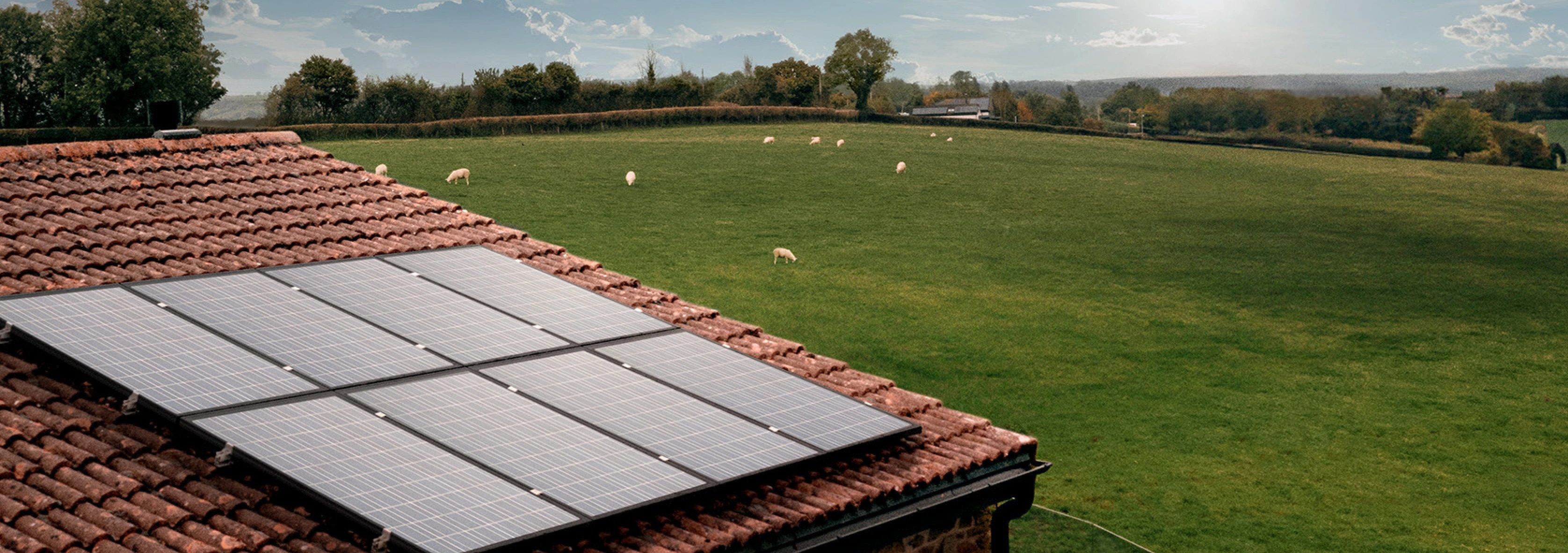
Solar panels have long been a brilliant way to take control of your home energy. But they’re not suitable for every home. So say hello to plug-in solar panels.
In response to global energy instability following the war in Iran, the government has just announced that plug-in solar panels will be available in UK shops within months. They’re changing wiring regulations so systems under 800W can plug safely into domestic sockets without needing an electrician.
This comes as part of the Future Home Standard (FHS), which will accelerate the shift towards homegrown clean energy. It means most new‑build homes will generate their own electricity with solar panels, use clean heating like a heat pump, and be designed for smart energy optimisation from day one.
Solar panels give you the power to be more energy independent – which can protect your pocket in times like this when energy markets are vulnerable and energy prices volatile. This, combined with the fact that costs are coming down, has resulted in solar panel installations increasing by more than 10% every year for the last three years.¹
And now with plug-in solar panels coming soon, even more people will be able to benefit.
What are plug‑in solar panels and how do they work?
Plug‑in solar panels are small, easy‑to‑use solar systems. They make a great, flexible alternative for homes that aren’t suitable for rooftop solar panels. Also known as plug‑and‑play solar or balcony solar, they’re perfect for smaller spaces. The update to wiring regulations is expected this summer, and once that happens it’ll be legal to use plug-in solar panels in the UK.
Because they don’t need any specialist installation, they’re a simple and low‑impact way to generate clean electricity. And this makes them popular with renters too.
Ideal for a balcony, terrace, shed roof or outdoor space, all you need to do is connect them to a standard 3‑pin socket to start generating your own electricity. You can use this instantly to power your home – so you don’t need to buy as much electricity from the grid.
What are plug‑in solar panels?
Plug‑in solar panels are compact solar systems designed to power individual homes or flats. They typically include one or two panels and an approved micro‑inverter, which allows the system to plug directly into a mains socket. You might mount them on a balcony railing, a shed roof, or a small garden structure - anywhere with good sun exposure and safe access.
How do plug‑in solar panels work?
Plug-in solar panels work in exactly the same way as a rooftop or any other solar set up:
- Sunlight hits the solar panel, generating DC electricity
- It’s converted into AC electricity suitable for home use by passing through a micro‑inverter
- This then flows into your home’s electrical system, helping reduce the amount you draw from the grid
Plug‑in solar panels are smaller than full rooftop systems and so produce less power, typically in the 200–800W range.
Are plug‑in solar panels different from traditional solar panels?
In some ways yes, but not in other ways. They work on the same principle and can help you become less reliant on electricity from the grid.
However, plug‑in solar panels are smaller and don’t produce as much power. You can also get started with one yourself, without needing professional installation by an electrician as rooftop panels do. And unlike them, plug-in solar panels are also portable, making them suitable if you’re renting or expect to move home soon.
What is a balcony solar system?
Plug-in solar panels are also referred to as balcony solar systems. These are specifically designed for flats or apartments and can be mounted on balcony railings or exterior walls. They’re perfect if you live in a home that doesn’t have access to a roof and want the chance to generate renewable electricity and reduce how much you rely on grid electricity.
What are the advantages of plug‑in solar panels?
Plug‑in solar panels share many of the same benefits as rooftop systems – and some more besides.
Simple to install
One of their biggest advantages is how straightforward plug-in solar panels are to install – you don’t need an electrician like you do with rooftop systems. Most people can set up plug-in solar panels without professional help or specialist tools.
All you need to do is:
- Mount the panel on a balcony, wall, or small structure
- Connect the cable to the micro‑inverter
- Plug it into an approved socket – either indoors or a weatherproof one outside
Many kits come with simple mounting brackets, and you should only need basic tools.
Low initial cost
Because plug‑in systems are small, they’re cheaper than other options – so they’re ideal for anyone wanting to try lowering their bills with solar energy, but don’t want to commit to a traditional rooftop system. They’re especially appealing if you rent or live somewhere that doesn’t allow permanent modifications.
Easy to move
Another benefit that’s a result of their smaller size is that plug‑in solar panels can be moved from one home to the next. If you relocate, you can just take the panels and take them with you - making them a flexible, future‑proof option.
Will new-build homes come with solar panels as standard?
The FHS is one of the biggest changes to home energy in over a decade and means most new homes will be built with:
- Solar panels as standard
- Low‑carbon heating, such as a heat pump or a heat network
- At least 75% lower predicted carbon emissions compared to 2013 standards²
- Expected energy savings of up to £830 a year for families in a typical home with an EPC rating of C.
So while plug‑in solar panels won’t be necessary in these newer homes, they’re a practical alternative for flats, older or rented homes and those where it’s simply not possible to install rooftop panels.
Are there any limitations to plug‑in solar panels?
Plug‑in solar panels share some of the same limitations as traditional rooftop systems. They’re both weather-dependent, so that they don’t generate as much electricity on cloudy days or during the shorter daylight hours of winter.
But plug‑in solar panels also generate much less electricity than a full rooftop setup, so they’re unlikely to power major appliances or be able to provide enough electricity for bigger households.
If you’re looking for reliable, high-output solar generation then traditional rooftop solar panels are still the better option.
When should you choose plug‑in solar panels?
Plug‑in solar panels are ideal if you:
- Rent and can’t install permanent systems
- Want for a low‑cost step into solar
- Have limited outdoor space, like balconies or patio
- Don’t use much electricity
- Try solar before committing to a rooftop installation
However, if you do have a larger home and use a lot of electricity or would like to earn money for selling excess energy back to the grid, then a traditional rooftop solar system is likely to be better for you. Homes with higher energy use, larger spaces, or plans to export electricity will benefit far more from a traditional rooftop solar system.
Experience the benefits of solar panels today with Hive
Power is getting energy companies to pay you – and it’s simple with Hive Solar. Install solar panels and a battery to start generating renewable energy from your rooftop and storing it to use when you need it. Then pair it with any British Gas energy tariff to get 25% off any electricity you still need to buy from the grid.
Or get even smarter and earn money for selling excess energy back to the grid by adding a Smart Export Guarantee (SEG) tariff.
FAQs
Can you plug solar panels directly into a socket?
Not right now, but this’ll change once the government’s proposed update to wiring regulations are made. This is expected to be in summer 2026, and from then systems under 800W will be able to plug safely into domestic sockets.
Will my energy supplier allow plug‑in solar?
You’ll need to make sure that your plug-in solar panel meets UK regulatory and safety requirements, but most energy suppliers accept small-scale solar generation. You may need to notify your local Distribution Network Operator (DNO), depending on the system’s size.
Can plug‑in solar overload my circuit?
Approved plug‑in systems include built-in safety protections designed to prevent overloading, so always use certified equipment and follow manufacturer guidance.
Are plug‑in solar panels waterproof?
Most modern systems are designed for outdoor use and can safely withstand typical UK weather, including rain and light snow. Always check the panel’s IP rating to be sure it’s suitable for the location you have in mind.
1: https://www.gov.uk/government/statistics/solar-photovoltaics-deployment
2: https://www.gov.uk/government/news/government-to-make-plug-in-solar-available-within-months